In the evolving world of building safety, NFPA 101: Life Safety Code stands as a cornerstone document, guiding professionals across architecture, engineering, facilities management, and fire protection. Unlike many codes focused solely on property protection, NFPA 101 places life safety at its core—prioritizing human survivability in the event of fire and other emergencies.
Whether you’re designing a high-rise in a bustling city, overseeing renovations to a heritage hotel, or managing fire safety for a public assembly venue, NFPA 101 provides performance-based and prescriptive strategies to protect occupants throughout a building’s lifecycle—from design to day-to-day operation.
Why NFPA 101 Matters:
- Comprehensive Scope: Covers new and existing buildings, including healthcare facilities, education buildings, residential occupancies, and special-use structures.
- Means of Egress: One of the most robust aspects—outlining requirements for escape routes that are accessible, unobstructed, and protected.
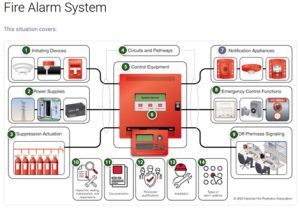
- Fire Protection Features: Addresses fire alarm systems, suppression systems, fire-rated construction, and smoke barriers to delay fire spread and allow safe evacuation.
- Occupant Behavior and Risk: Considers factors like occupant mobility, familiarity with surroundings, and emergency preparedness.
- Global Relevance: Although developed in the U.S., NFPA 101’s principles resonate worldwide and are often referenced in international codes and large-scale developments.
Applying NFPA 101 in Practice
On major projects—such as urban entertainment districts, stadiums, healthcare campuses, and transport infrastructure—NFPA 101 offers flexibility through its performance-based design options. This allows engineers and designers to innovate while still meeting the intent of the Code: preserving life through sound, defendable safety strategies.
Understanding Occupancy Classifications: The Foundation of Life Safety Strategy
NFPA 101 organizes requirements by occupancy type, with tailored provisions that reflect the risks, occupant behavior, and use patterns unique to each setting. Here’s a closer look at some of the key occupancy classifications:
1. Assembly Occupancies (Ch. 12 & 13)
These include theaters, stadiums, convention centers, places of worship, and nightclubs—spaces where large numbers gather, often unfamiliar with their surroundings. Key considerations include:
- Occupant load thresholds (50+ people defines an assembly occupancy)
- Multiple means of egress
- Crowd management planning
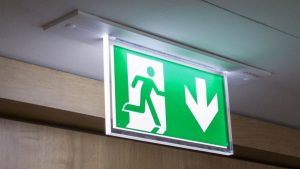
- Emergency lighting and exit signage
2. Educational Occupancies (Ch. 14 & 15)
Applies to K–12 schools and similar facilities where care and supervision are expected.
- Emphasis on daily-use familiarity and supervised evacuation
- One-hour fire barriers for separation of spaces
- Requirements for smoke detection and automatic sprinkler systems (especially in new facilities)
3. Day-Care and Residential Board and Care (Ch. 16, 17, 32, 33)
These occupancies house people who may need assistance during evacuation.
Restrictions on the number of occupants per story
- Smoke compartmentation
- Staff-to-resident ratios and emergency evacuation drills
4. Health Care Occupancies (Ch. 18 & 19)
These include hospitals and nursing homes with defend-in-place strategies.
- Compartmentalization using fire/smoke barriers
- Protected corridors and refuge areas
- Detailed egress requirements for both ambulatory and non-ambulatory occupants
- Full sprinkler protection for new facilities
5. Residential Occupancies (Ch. 24–31)
Includes one- and two-family dwellings, apartment buildings, hotels, and dormitories.
- Fire detection and alarm systems in sleeping areas
- Smoke alarms in each sleeping room, outside sleeping areas, and on every level
- Means of egress—typically one or two exits depending on configuration and height
6. Business & Mercantile Occupancies (Ch. 38–39 & 36–37)
Covers offices, banks, retail stores, and shopping centers.
- Emphasis on clear, marked egress paths
- Egress travel distance limits (e.g., 75–250 ft depending on protection)
- Sprinklers required in larger or more complex layouts
7. Industrial, Storage, and Special Structures (Ch. 40–42)
Industrial operations and storage areas have higher fire loads and fewer occupants.
- Special hazards addressed, including combustible dust, flammable liquids, or high piled storage
- Separation distances and fire barriers
- Smoke control systems in large, complex facilities
Flexibility Through Performance-Based Design
On major projects—such as urban entertainment districts, stadiums, healthcare campuses, or transport hubs—NFPA 101 enables innovation through performance-based design. This allows fire engineers and design teams to develop equivalent or superior safety solutions outside of strict prescriptive pathways, using tools such as egress modeling, fire simulations, and human behavior analysis.
NFPA 101: A Code That Evolves
The world isn’t static, and neither is NFPA 101. Its regular updates reflect lessons learned from real-world incidents, emerging technologies, and evolving risk landscapes, such as the increasing focus on sustainability, accessibility, resilience and human behavior during emergencies.